<?xml version="1.0" encoding="UTF-8"?>
<?xml-stylesheet type="text/xsl" href="/stylesheets/feed.atom.xml" media="screen"?>
<feed xml:lang="en-US" xmlns="http://www.w3.org/2005/Atom">
  <id>tag:clarklab.nd.edu,2005:/news</id>
  <link rel="alternate" type="text/html" href="https://clarklab.nd.edu"/>
  <link rel="self" type="application/atom+xml" href="https://clarklab.nd.edu/news.atom"/>
  <id>tag:clarklab.nd.edu,2005:/latest</id>
  <title>Clark Lab | News</title>
  <updated>2025-08-07T15:48:00-04:00</updated>
  <link rel="alternate" type="text/html" href="https://clarklab.nd.edu/"/>
  <link rel="self" type="application/atom+xml" href="https://clarklab.nd.edu//news.atom"/>
  <subtitle>The Clark Lab at the University of Notre Dame seeks to understand how cells produce functional proteins at the proper levels, including how the cellular environment supports folding of proteins to their functional (“native”) structures</subtitle>
  <entry>
    <id>tag:clarklab.nd.edu,2005:News/174210</id>
    <published>2025-08-07T15:48:00-04:00</published>
    <updated>2025-08-15T17:01:19-04:00</updated>
    <link rel="alternate" type="text/html" href="https://clarklab.nd.edu/news/scientists-discover-key-protein-folding-step-a-race-between-folding-and-misfolding/"/>
    <title>Scientists Discover Key Protein Folding Step: A Race Between Folding and Misfolding</title>
    <summary type="text">
      <![CDATA[A breakthrough by researchers at the University of Notre Dame has uncovered a crucial step in the life of a protein that may determine whether it works properly or instead ends up misfolded and non-functional. Their findings reveal a surprising race at the heart of protein folding, and offer new hope…]]>
    </summary>
    <content type="html">
      <![CDATA[<p>A breakthrough by researchers at the University of Notre Dame has uncovered a crucial step in the life of a protein that may determine whether it works properly or instead ends up misfolded and non-functional. Their findings reveal a surprising race at the heart of protein folding, and offer new hope for understanding diseases like Alzheimer’s, Parkinson’s, and others linked to protein malfunction.</p>
<p>The research, led by Qing Luan and <a href="https://chemistry.nd.edu/people/patricia-clark/">Patricia Clark, the Rev. John Cardinal O’Hara C.S.C. Professor of Biochemistry,</a> focuses on how a large protein called pertactin, produced by bacteria, manages to fold into its correct shape. Proteins are long linear polymers that have different folding properties depending on their chemical structure and folding environment. Pertactin is much larger than most proteins typically used by scientists as models to study protein folding, but it is similar to the average size of all proteins in our cells. In the test tube, pertactin folds so slowly that scientists have long suspected it might be getting stuck along the way, and that the environment in the cell might help it avoid getting stuck in misfolded shapes.</p>
<p>Now, thanks to a clever new approach, the Notre Dame team has discovered a short-lived, “in-between” structure — named PFS* — that lies along the pathway for folding and acts like a fork in the road. At this crucial point, pertactin can either continue toward its proper folded form or fall into a misfolded trap that it may never escape.</p>
<p><strong>The Tortoise and the Hare, Reimagined</strong></p>
<p>To explain their findings, Luan and Clark use a familiar story: Aesop’s fable The Tortoise and the Hare. In their version, the “hare” follows the correct folding path: fast and efficient. The “tortoise” takes the fork in the road that leads to the misfolded shape that is quite stable. It’s a slow process but difficult to undo.</p>
<p>“If the protein hesitates too long in this intermediate state, the tortoise wins,” said Professor Clark. “It ends up misfolded. But if it keeps moving quickly, it can get to the correct shape. The hare wins — and the protein functions as it should.”</p>
<p>This balance between speed and stability helps explain why protein folding can go wrong, and why some conditions — like those inside cells — can help proteins fold correctly while others increase the risk of failure.</p>
<p><strong>Finding What’s Been Hiding in Plain Sight</strong></p>
<p>The newly discovered folding intermediate, PFS*, is tricky to spot. It looks almost identical to the stable misfolded form of the protein (called simply PFS) when viewed using traditional methods to study protein folding. The difference? PFS* is unstable and temporary, while PFS is stable and stuck.</p>
<p>To catch this fleeting moment at the junction between folding and misfolding, Luan and Clark designed a special experiment known as a “double-jump denaturant challenge.” They briefly allowed pertactin to fold, waiting just long enough for PFS* to form, then quickly added just enough of a chemical called a denaturant to rapidly unfold PFS* but leave the stable misfolded PFS state unaffected. Then, they watched how the protein reacted.<strong> </strong> If pertactin unfolded quickly when the denaturant was added, they knew they had caught PFS* before it turned into the misfolded PFS.</p>
<p>“This gave us a time-lapse snapshot of the decision point between folding correctly and misfolding,” said Luan. “And for the first time, we could see that PFS* is a separate state that determines the fate of the folding process.”</p>
<p><strong>A Folding Process with Direction</strong></p>
<p>Another key insight from the study is that pertactin folds in a specific direction, from one end to the other: specifically, from its C-terminal end to its N-terminal end. This was a surprising discovery because it matches how pertactin folds in living bacteria, where it folds while it is “pushed” out of the cell, starting with its C-terminal end. Luan and Clark found that progressive folding from the C-terminal end helps prevent parts of the protein from getting tangled with each other, which can slow down folding and lead to misfolding.</p>
<p><strong>Why This Matters for Human Health</strong></p>
<p>Misfolded proteins are a known factor in many serious illnesses. Misfolded proteins can clump together and form harmful aggregates that damage cells. By identifying the exact moment when a protein chooses between proper folding and misfolding, this study opens the door to ultimately developing new treatments that could tip the balance in favor of healthy, properly folded proteins.</p>
<p>“If we can find ways to help proteins move through PFS* to the correctly folded structure more quickly, we might be able to prevent them from ever misfolding,” said Clark.</p>
<p><strong>A Path Forward</strong></p>
<p>The research offers not just a scientific advance, but a shift in how we think about folding: it’s not just the final shape that matters, but the journey to get there — and how fast it happens.</p>
<p>The study, “Identification of an On-Pathway Protein Folding Intermediate Illuminates the Kinetic Competition Between Folding and Misfolding”, was published in Proceedings of the National Academy of Sciences. Research in Clark’s lab is funded by the National Institutes of Health.</p>
<p> </p>
<p class="attribution">Originally published by <span class="rel-author">Samantha Keller</span> at <span class="rel-source"><a href="https://science.nd.edu/news-and-media/news/scientists-discover-key-protein-folding-step-a-race-between-folding-and-misfolding/">science.nd.edu</a></span> on <span class="rel-pubdate">August 07, 2025</span>.</p>]]>
    </content>
    <link rel="enclosure" type="image/jpeg" href="https://clarklab.nd.edu/assets/624956/untitled_design_19_.jpg" title="A woman with long brown hair, black glasses, pearl necklace and matching earrings, and black V-neck top with white trim smiles next to a man with short dark hair in a light blue button-down shirt with red, white, and blue chest stripes."/>
    <author>
      <name>Samantha Keller</name>
    </author>
  </entry>
  <entry>
    <id>tag:clarklab.nd.edu,2005:News/166193</id>
    <published>2024-08-30T15:16:00-04:00</published>
    <updated>2024-08-30T15:16:25-04:00</updated>
    <link rel="alternate" type="text/html" href="https://clarklab.nd.edu/news/silent-mutations-found-to-have-repercussions-beyond-their-own-gene/"/>
    <title>‘Silent’ mutations found to have repercussions beyond their own gene</title>
    <summary type="text">
      <![CDATA[Researchers from the University of Notre Dame are adding new evidence to the emerging concept that "silent" or synonymous mutations may have crucial consequences. Their study, published in the Proceedings of the National Academy of Sciences, showed how a synonymous mutation in one gene can significantly affect a neighboring gene, increasing its protein production.]]>
    </summary>
    <content type="html">
      <![CDATA[<p>Genetic disorders — like cystic fibrosis and Huntington’s disease — are considered incurable, with gene mutations occurring in essentially every cell of the body.</p>
<p>Gene mutations occur when one nucleotide in a codon is switched. In non-synonymous mutations, this disrupts the codon’s function to code for its amino acid. In synonymous mutations, the codon still codes the correct amino acid. As such, these mutations are dubbed “silent” and often considered inconsequential to human health.</p>
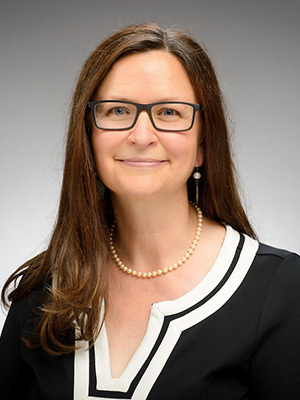
<figure class="image image-right"><img src="https://news.nd.edu/assets/457937/patricia_clark_1_300x.jpg" alt="Patricia L. Clark" width="300" height="400">
<figcaption>Patricia L. Clark (Photo by Matt Cashore/University of Notre Dame)</figcaption>
</figure>
<p>Now, researchers from the University of Notre Dame are adding new evidence to the emerging concept that these silent mutations may have crucial consequences. Their study, <a href="https://www.pnas.org/doi/10.1073/pnas.2405510121">published in the Proceedings of the National Academy of Sciences</a>, showed how a synonymous mutation in one gene can significantly affect a neighboring gene, increasing its protein production.</p>
<p>“The dogma in the field right now is that within the protein coding part of the genome, the only mutations that matter are the ones that change the DNA to code from one amino acid to another,” said <a href="https://chemistry.nd.edu/people/patricia-clark/">Patricia L. Clark</a>, the O’Hara Professor of Chemistry and Biochemistry at Notre Dame and lead author of the study. “That’s a very oversimplified view — to the point of being detrimental — of what matters.”</p>
<p>For this study, funded by Clark’s <a href="https://news.nd.edu/news/patricia-clark-awarded-nih-pioneer-award-the-first-in-indiana/">Director’s Pioneer Award</a> from the National Institutes of Health, researchers experimented with the genome of the bacteria E. coli, as its small genome and simple cell structure make it more straightforward to ask fundamental questions about the impact of mutations than human cells. They created nine different synonymous versions of the CAT (Chloramphenicol acetyltransferase) gene, with each using different synonymous codons to encode the CAT protein.</p>
<p>When those different synonymous versions were expressed, they discovered that four of nine synonymous sequences affected the number of CAT proteins synthesized.</p>
<p>“Think about synonymous mutations like a huge quilt of possible DNA sequences that are all going to give you the same protein,” Clark said. “You can pick any part of the quilt and get the same protein, but will you get the same amount of protein? Will the protein fold be the same? Is the cell going to be healthy? This is what we were looking at.”</p>
<p>Clark’s initial hypothesis, as an expert in protein folding, was that these four synonymous mutations might be altering CAT protein folding, which occurs after gene expression. However, the researchers — including first author Anabel Rodriguez, then a doctoral student in Clark’s lab — went on to discover that the impact of the synonymous mutations occurs during the gene expression process, affecting the transcription of DNA to RNA.</p>
<p>“What Anabel showed was that the amount of CAT protein synthesis was correlated to the amount of CAT RNA synthesis,” Clark said. “This indicated that some synonymous mutations screwed up the synthesis of RNA from DNA. That Anabel was able to figure out this novel transcriptional regulation mechanism, while working in a lab with no previous experience studying transcription, is a remarkable achievement.”</p>
<p>The research showed that some of the synonymous mutations created cryptic transcription sites on the CAT DNA strand. RNA polymerase, the enzyme responsible for transcribing DNA to RNA, was binding to these cryptic transcription sites – instead of their expected binding site.</p>
<p>These polymerases synthesized an RNA that started within CAT, but extended to also encode the entire neighboring, upstream gene. In the case of CAT, the upstream gene encodes a repressor protein, so making more of it represses the expression of CAT.</p>
<p>The concept of a synonymous mutation impacting its own gene’s processes has only been considered in the last decade. So the idea that a synonymous mutation on one gene could also affect the transcription and translation processes of a neighboring gene is a significant expansion — and something Clark and her lab plan to further explore.</p>
<p>“There has been an increasing number of landmark studies that show how incomplete our understanding is on the impact of synonymous mutations. We should be considering how these mutations impact all diseases and genetic disorders,” Clark said. “I hope that our study will help accelerate the building of a comprehensive understanding.”</p>
<p>Next, the research team plans to analyze how some of the synonymous mutations of the CAT gene were able to recruit RNA polymerase to the cryptic binding location so efficiently. This is especially intriguing given that the currently available machine learning algorithms have not been able to accurately predict it.</p>
<p>Clark serves as an associate vice president of research and director of the <a href="https://bic.nd.edu/">Biophysics Instrumentation Core Facility</a> at Notre Dame. Anabel Rodriguez, former graduate student in Clark’s lab and current instructor at Coastal Carolina Community College, was the lead author of the study.</p>
<p>Other study co-authors include Jacob Diehl, Christopher Bonar, Taylor Lundgren, McKenze Moss, <a href="https://acms.nd.edu/people/jun-li/">Jun Li</a>, <a href="https://engineering.nd.edu/faculty/tijana-milenkovic/">Tijana Milenkovic</a>, <a href="https://chemistry.nd.edu/people/paul-huber/">Paul Huber</a> and <a href="https://chemistry.nd.edu/people/matthew-champion/">Matthew Champion</a> from Notre Dame; Gabriel Wright from the Milwaukee School of Engineering; and Scott Emrich from the University of Tennessee.</p>
<p><em><strong id="docs-internal-guid-d189cf3c-7fff-a332-1bdf-c1d5d0f40ff6">Contact:</strong> Brandi Wampler, associate director of media relations, 574-631-2632, <a href="mailto:brandiwampler@nd.edu">brandiwampler@nd.edu</a></em></p>
<p class="attribution">Originally published by <span class="rel-author">Brandi Wampler</span> at <span class="rel-source"><a href="https://news.nd.edu/news/silent-mutations-found-to-have-repercussions-beyond-their-own-gene/">news.nd.edu</a></span> on <span class="rel-pubdate">August 28, 2024</span>.</p>]]>
    </content>
    <link rel="enclosure" type="image/jpeg" href="https://clarklab.nd.edu/assets/582660/digital_art_of_dna_istock.jpg" title="A detailed 3D rendering of a glowing blue DNA double helix, with its twisted strands and base pairs prominent against a dark background."/>
    <author>
      <name>Brandi Wampler</name>
    </author>
  </entry>
  <entry>
    <id>tag:clarklab.nd.edu,2005:News/178371</id>
    <published>2023-03-23T15:46:00-04:00</published>
    <updated>2026-01-12T15:48:34-05:00</updated>
    <link rel="alternate" type="text/html" href="https://clarklab.nd.edu/news/notre-dame-biochemist-patricia-clark-receives-the-2023-dorothy-crowfoot-hodgkin-award/"/>
    <title>Notre Dame Biochemist Patricia Clark receives the 2023 Dorothy Crowfoot Hodgkin Award</title>
    <summary type="text">
      <![CDATA[The Protein Society, the premier international society dedicated to supporting protein research, announced today…]]>
    </summary>
    <content type="html">
      <![CDATA[<!-- Output copied to clipboard! --><!-- Yay, no errors, warnings, or alerts! -->
<p><a href="https://www.proteinsociety.org/">The Protein Society</a>, the premier international society dedicated to supporting protein research, <a href="https://ps.memberclicks.net/protein-society-awards">announced today</a> that <a href="https://chemistry.nd.edu/people/patricia-l-clark/">Patricia L. Clark</a>, the Rev. John Cardinal O'Hara Professor in the University of Notre Dame's <a href="https://chemistry.nd.edu/">Department of Chemistry &amp; Biochemistry</a>, is the recipient of the 2023 Dorothy Crowfoot Hodgkin Award.</p>
<p>Named in honor of Dorothy Crowfoot Hodgkin, a Nobel laureate and founder of protein crystallography, the Dorothy Crowfoot Hodgkin Award recognizes "exceptional contributions in protein science which profoundly influence our understanding of biology."</p>
<p><a href="https://provost.nd.edu/about/charles-and-jill-fischer-provost/">John T. McGreevy</a>, the Francis A. McAnaney Professor of History and Charles and Jill Fischer Provost at Notre Dame, said, "We are grateful to the Protein Society for recognizing Patricia Clark and her work. Her groundbreaking research has deepened our understanding of protein structures as well as protein folding-related diseases. Her mentorship and her ability to lead advancements in science that also serve the greater good are a powerful example for faculty, both at Notre Dame and elsewhere around the world."</p>
<p>Clark received her B.S. in Chemistry from the Georgia Institute of Technology and her Ph.D. in Molecular Biophysics, University of Texas Southwestern Medical Center at Dallas. She joined the faculty at Notre Dame in 2001, after completing a postdoctoral fellowship at the Massachusetts Institute of Technology.</p>
<p>Clark is known for pioneering new techniques for analyzing protein folding. Her work investigates how and why protein folding mechanisms fail, leading to diseases such as cystic fibrosis, Alzheimer's disease, juvenile cataracts, and many forms of cancer. She collaborates extensively with computer scientists, statisticians, and computational biologists. The Hodgkin Award specifically acknowledges Clark’s pioneering discoveries regarding the contributions of the cellular environment, including the roles of synonymous codons, to support proper protein folding and function.</p>
<p>In 2018, Clark founded Notre Dame's graduate program in <a href="https://biophysics.nd.edu/">Biophysics</a>, and in 2021 she was <a href="https://news.nd.edu/news/university-of-notre-dame-announces-new-associate-vice-president-for-research-development/">appointed</a> associate vice president for research. She also supports biophysics education and research broadly at Notre Dame as director of the <a href="https://bic.nd.edu/">Biophysics Instrumentation Core (BIC) Facility</a>, a core facility of <a href="https://research.nd.edu/">Notre Dame Research</a>.</p>
<p>Throughout her career, Clark has received many awards, including a National Science Foundation (NSF) CAREER Award, the Barany Award from the Biophysical Society, and a <a href="https://news.nd.edu/news/patricia-clark-awarded-nih-pioneer-award-the-first-in-indiana/">Pioneer Award</a> from the National Institutes of Health (NIH). Her research is or has been funded by grants from the National Institutes of Health, the National Science Foundation, the American Heart Association and the W.M. Keck Foundation.</p>
<p>Clark will officially receive the award at the 37th Anniversary Symposium of the Protein Society on July 13 to 16, 2023, in Boston, Mass., where she will deliver a plenary lecture.</p>
<p>The previous winners of the Dorothy Crowfoot Hodgkin Award are:</p>
<p style="margin-left: 40px;">2022 — Sun Hur (Harvard University)</p>
<p style="margin-left: 40px;">2021 — Janet Smith (University of Michigan)</p>
<p style="margin-left: 40px;">2020 — Catherine Drennan (Massachusetts Institute of Technology)</p>
<p style="margin-left: 40px;">2019 — Hao Wu (Harvard University)</p>
<p style="margin-left: 40px;">2018 — Susan Marqusee (University of California, Berkeley)</p>
<p style="margin-left: 40px;">2017 — Juli Feigon (UCLA) and Manajit Hayer-Hartl (Max-Planck Institute of Biochemistry)</p>
<p style="margin-left: 40px;">2016 — Rachel Klevit (University of Washington)</p>
<p style="margin-left: 40px;">2015 — Eva Nogales (University of California, Berkeley)</p>
<p style="margin-left: 40px;">2014 — Judith Frydman (Stanford University)</p>
<p style="margin-left: 40px;">2013 — Christopher Hill (University of Utah) and Cynthia Wolberger (Johns Hopkins University)</p>
<p style="margin-left: 40px;">2012 — Mark Lemmon (Yale University)</p>
<p style="margin-left: 40px;">2011 — Brenda Schulman (St. Jude Children's Research Hospital) and Wei Yang (National Institutes of Health)</p>
<p style="margin-left: 40px;">2010 — Lila Gierasch (University of Massachusetts Amherst)</p>
<p style="margin-left: 40px;">2009 — Janet Thornton (European Bioinformatics Institute)</p>
<p style="margin-left: 40px;">2008 — Douglas Rees (California Institute of Technology)</p>
<p style="margin-left: 40px;">2007 — Leemor Joshua-Tor (Cold Spring Harbor Laboratory)</p>
<p><strong>Contact:</strong></p>
<p>Brett Beasley / Writer and Editorial Program Manager</p>
<p>Notre Dame Research / University of Notre Dame</p>
<p>bbeasle1@nd.edu / +1 574-631-8183</p>
<p>research.nd.edu / @UNDResearch</p>
<p><strong>About Notre Dame Research:</strong></p>
<p>The University of Notre Dame is a private research and teaching university inspired by its Catholic mission. Located in South Bend, Indiana, its researchers are advancing human understanding through research, scholarship, education, and creative endeavor in order to be a repository for knowledge and a powerful means for doing good in the world. For more information, please see research.nd.edu or @UNDResearch.</p>
<p class="attribution">Originally published by <span class="rel-author">Brett Beasley</span> at <span class="rel-source"><a href="https://research.nd.edu/news-and-events/news/notre-dame-biochemist-patricia-clark-receives-the-2023-dorothy-crowfoot-hodgkin-award/">research.nd.edu</a></span> on <span class="rel-pubdate">March 22, 2023</span>.</p>]]>
    </content>
    <link rel="enclosure" type="image/jpeg" href="https://clarklab.nd.edu/assets/644583/patricia_clark_1_feature.jpg" title="Patricia Clark 1 Feature"/>
    <author>
      <name>Brett Beasley</name>
    </author>
  </entry>
  <entry>
    <id>tag:clarklab.nd.edu,2005:News/178369</id>
    <published>2021-10-05T15:45:00-04:00</published>
    <updated>2026-01-12T15:48:54-05:00</updated>
    <link rel="alternate" type="text/html" href="https://clarklab.nd.edu/news/patricia-clark-awarded-nih-pioneer-award-the-first-in-indiana/"/>
    <title>Patricia Clark awarded NIH Pioneer Award, the first in Indiana</title>
    <summary type="text">
      <![CDATA[Patricia L. Clark, the Rev. John Cardinal O’Hara, C.S.C., Professor of Chemistry and Biochemistry and associate vice president for research at the University of Notre Dame, has received a Director’s Pioneer Award from the National Institutes of Health.]]>
    </summary>
    <content type="html">
      <![CDATA[<p><a href="https://chemistry.nd.edu/people/patricia-l-clark/">Patricia L. Clark,</a> the Rev. John Cardinal O’Hara, C.S.C., Professor of <a href="https://chemistry.nd.edu/">Chemistry and Biochemistry</a> and associate vice president for research at the University of Notre Dame, has received a <a href="https://commonfund.nih.gov/pioneer/AwardRecipients">Director’s Pioneer Award from the National Institutes of Health</a>. These awards are given to exceptionally creative scientists advancing high-risk, high-impact research. Clark is the first researcher in Indiana to receive this distinguished award since the program’s inception in 2004.</p>
<p>Clark will use the award to develop new experimental approaches to measure the sensitivity of proteins to so-called silent changes in the DNA sequence. Clark studies how proteins — the powerhouses of human cells — fold or misfold into three-dimensional shapes as they are synthesized and secreted across cell membranes. Misfolded proteins can lead to a variety of diseases, from cancer to Alzheimer’s disease. She will use the $5 million, five-year NIH award to develop new experimental approaches to measure the sensitivity of proteins to silent changes in the DNA sequence.</p>
<p>“I was elated when I received the score for my proposal,” Clark said of the historic award. “The research questions that my laboratory is pursuing are fundamental questions about how biomolecules are synthesized, fold and function. I am honored that the review panel, which was composed of both clinicians and basic science researchers, appreciates the importance of understanding these fundamental mechanisms in order to ultimately improve human health.”</p>
<p>Clark, who is also director of Notre Dame’s <a href="https://bic.nd.edu/about/">Biophysics Instrumentation Core Facility</a>, uses bacteria as a model for her studies, but her goal is to discover mechanisms that apply to all organisms, including humans.</p>
<p><span lang="EN" style="background: white;">“Patricia Clark conducts extraordinary and innovative research, and we are so proud that she does that work here at Notre Dame,” said Marie Lynn Miranda, the Charles and Jill Fischer Provost of the University of Notre Dame. “The prestigious NIH Director’s Pioneer Award indicates that the University is cultivating the people and the environment for groundbreaking research."</span></p>
<p>Proteins are long, linear polymers built from a set of 20 standard amino acids. In DNA, each amino acid is “coded” by a chain of three nucleotides in a row, called a codon. Though there are only 20 standard amino acids, there are 64 possible codons. Therefore, most amino acids can be encoded by more than one codon. From the discovery of codons in the 1960s, it was assumed that substitutions between codons that encode the same amino acid were inconsequential because they preserve the protein’s amino acid sequence. But more recently, researchers <a href="https://news.nd.edu/news/study-finds-silent-genetic-variations-can-alter-protein-folding/">including Clark</a> have discovered that these silent codon substitutions can have consequences for protein production and folding.</p>
<p>“It has become clear that synonymous substitutions at the DNA level can affect the structure that a protein will fold into,” Clark said.</p>
<p><span lang="EN" style="background: white;">Many important diseases are caused by what happens at the biomolecular synthesis level long before patients exhibit any symptoms, said Santiago Schnell, the William K. Warren Foundation Dean of the College of Science. </span></p>
<p><span lang="EN" style="background: white;">“Professor Clark’s research will lead to entirely new concepts and will use new approaches to understand how molecules inside the cells are synthesized and function,” he said. “Her findings will propel basic biomedical research, and in the long term will lead to improvements in human health.”</span></p>
<p>Historically, it has been difficult to study changes in how proteins fold inside a cell, creating an incomplete picture of the extent to which codon substitutions contribute to the process. Clark’s goal is to break through these technical challenges. Using a common laboratory strain of the bacterium E. coli, her research group will develop a screening tool that will help determine which types of proteins are most sensitive to synonymous codon substitutions. The ultimate goal of the project will be to develop a predictive understanding of how synonymous codon mutations affect our susceptibility to genetic diseases.</p>
<p>“We recently celebrated the 20th anniversary of the sequencing of the human genome. Since that time, we have sequenced so much human DNA that we have begun to learn which DNA mutations make us more susceptible to certain diseases. Surprisingly, some of these mutations are synonymous codon substitutions.</p>
<p>“Understanding how these synonymous substitutions affect protein folding therefore holds the promise of helping us better understand the molecular basis of disease, so we can design more effective interventions,” Clark said.</p>
<p>Clark’s Pioneer Award was one of only 10 awarded by the NIH this year and one of 106 grants made in <a href="https://commonfund.nih.gov/highrisk">NIH’s High-Risk, High-Reward Research program</a>, representing approximately $329 million in funding over five years.</p>
<p>“The science put forward by this cohort is exceptionally novel and creative and is sure to push at the boundaries of what is known,” NIH Director Dr. Francis S. Collins said in a news release. “These visionary investigators come from a wide breadth of career stages and show that groundbreaking science can happen at any career level given the right opportunity.”</p>
<p><span lang="EN" style="background: white;">Clark joined the University of Notre Dame’s Department of Chemistry and Biochemistry in 2001. She is a recipient of the Biophysical Society’s Michael and Kate Bárány Award, a CAREER award from the National Science Foundation and a Medical Research Award from the W.M. Keck Foundation, and has twice received Notre Dame’s Rev. Edmund P. Joyce, C.S.C., Award for Excellence in Undergraduate Teaching. Before joining Notre Dame, she spent four years as a postdoctoral scholar at the Massachusetts Institute of Technology, funded by an NIH National Research Service Award fellowship. Clark holds a bachelor’s degree in chemistry from Georgia Institute of Technology and a doctorate in molecular biophysics from the University of Texas Southwestern Medical School at Dallas.</span></p>
<p class="attribution"><em>Originally published by <span class="rel-author">Deanna Csomo Ferrell</span> at <span class="rel-source"><a href="https://news.nd.edu/news/patricia-clark-awarded-nih-pioneer-award-the-first-in-indiana/">news.nd.edu</a></span> on <span class="rel-pubdate">October 05, 2021</span>.</em></p>]]>
    </content>
    <link rel="enclosure" type="image/jpeg" href="https://clarklab.nd.edu/assets/644583/patricia_clark_1_feature.jpg" title="Patricia Clark 1 Feature"/>
    <author>
      <name>Deanna Csomo Ferrell</name>
    </author>
  </entry>
  <entry>
    <id>tag:clarklab.nd.edu,2005:News/178372</id>
    <published>2018-02-28T15:47:00-05:00</published>
    <updated>2026-01-12T16:02:32-05:00</updated>
    <link rel="alternate" type="text/html" href="https://clarklab.nd.edu/news/biophysicist-patricia-clark-awarded-1-1m-keck-grant-for-protein-folding-study/"/>
    <title>Biophysicist Patricia Clark awarded $1.1M Keck grant for protein folding study</title>
    <summary type="text">
      <![CDATA[Patricia Clark, Rev. John Cardinal O’Hara, C.S.C., Professor of Biochemistry at the University of Notre Dame, has been awarded a $1.1 million, four-year grant from the W. M. Keck Foundation to develop an innovative approach to replicate in test tubes a universal component of protein folding within cells.]]>
    </summary>
    <content type="html">
      <![CDATA[<p><a href="http://chemistry.nd.edu/people/patricia-l-clark/">Patricia Clark</a>, Rev. John Cardinal O’Hara, C.S.C., Professor of Biochemistry at the University of Notre Dame, has been awarded a $1.1 million, four-year grant from the<a href="http://www.wmkeck.org/"> W. M. Keck Foundation</a> to develop an innovative approach to replicate in test tubes a universal component of protein folding within cells.</p>
<p>Results from this medical research grant could shed new light on how deadly bacterial infections spread.</p>
<p>Clark and her colleagues, including<a href="http://chemistry.nd.edu/people/masaru-k-kuno/"> Masaru Kuno</a>, professor in the<a href="http://chemistry.nd.edu/"> Department of Chemistry and Biochemistry</a>, will exploit a new technology to tackle the complex folding mechanisms of autotransporter proteins, which are proteins with properties that help them cross bacterial membrane systems. Autotransporter proteins contribute to infections from bacteria such as E. coli and salmonella.</p>
<p>“I am deeply grateful to the Keck Foundation for their support of highly innovative, paradigm-breaking research projects,” Clark said. “This high level of innovation is necessary to break through the technical barriers that constrain our current understanding of protein folding.”</p>
<p>Proteins are long chains of amino acids that fold into specific three-dimensional structures, giving them their active shapes and determining their interactions with other molecules in the cell. Protein folding has been studied in test tubes for more than 70 years, but the folding process is different inside cells. In the cell, proteins fold from one end to the other as they are synthesized or transported across a membrane. Currently, there is no way to replicate this “vectorial” folding mechanism in the test tube.</p>
<p>Fully understanding how the vectorial folding mechanism responds during each of these membrane transport processes may be the key to eventually stopping the fold in its tracks. Clark will use a combination of other proteins and solid-state technology to develop a way to initiate this type of protein folding in the test tube, allowing her and her colleagues to study cellular folding mechanisms in unprecedented detail.</p>
<p>By learning more about why proteins fold like they do, Clark and her colleagues may be able to prevent the spread of infectious diseases.</p>
<p>“We are honored that the Keck Foundation has recognized Professor Clark’s and Professor Kuno’s groundbreaking medical research in molecular biophysics,” said<a href="https://science.nd.edu/about/office-of-the-dean/galvin/"> Mary Galvin</a>, the William K. Warren Foundation Dean of the College of Science. “We are grateful to the foundation for providing this grant for work that has the potential to transform the understanding of how proteins fold and spread disease.​​​​​”</p>
<p>Based in Los Angeles, the W. M. Keck Foundation was established in 1954 by the late W. M. Keck, founder of the Superior Oil Company. The foundation’s grant-making is focused primarily on pioneering efforts in the areas of medical, science and engineering research. The foundation also maintains an undergraduate education program that promotes distinctive learning and research experiences for students in the sciences and in the liberal arts, and a Southern California Grant Program that provides support for the Los Angeles community, with a special emphasis on children and youth from low-income families, special needs populations and safety-net services. For more information, visit <a href="http://www.wmkeck.org/">www.wmkeck.org</a>.</p>
<p><strong id="docs-internal-guid-00cb7a04-7fff-41fb-c607-859267de5407">Originally published by Sue Lister at <a href="https://news.nd.edu/news/biophysicist-patricia-clark-awarded-1-1m-keck-grant-for-protein-folding-study/">news.nd.edu</a> on February 27, 2018.</strong></p>]]>
    </content>
    <link rel="enclosure" type="image/jpeg" href="https://clarklab.nd.edu/assets/644586/patricia_clark_feature.jpg" title="Patricia Clark Feature"/>
    <author>
      <name>Deanna Csomo McCool</name>
    </author>
  </entry>
</feed>